Armstrong Team
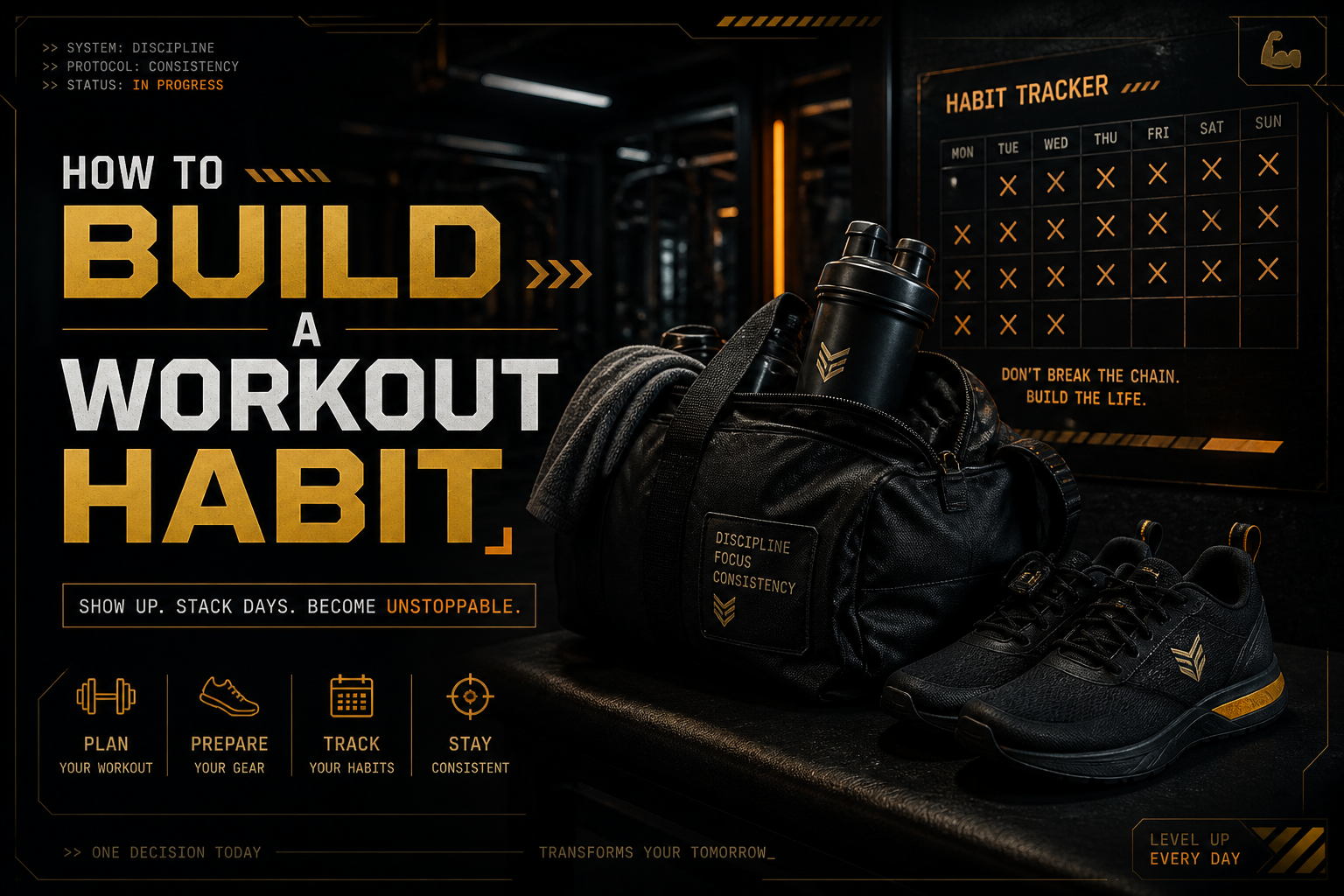
How to Build a Workout Habit That Sticks (Science-Based Guide)
Stop relying on willpower. Learn how to use Atomic Habits principles—habit stacking, environment design, and the 2-minute rule—to make gym consistency automatic.
Willpower is finite. Habits are automatic. Most people fail because they try to change their identity overnight with sheer effort.
Building a workout habit requires a system, not a resolution. Follow the four laws of behavior change to make fitness your new default.
Law 1: Make It Obvious
Your brain needs cues. If your gym habit is invisible, it won't happen.
- Environment Design — Pack your gym bag the night before. Place it in front of the door. You shouldn't have to look for your shoes when you're tired.
- Habit Stacking — Anchor your workout to an existing routine. "After I close my laptop for work, I will put on my gym clothes."
- Implementation Intentions — Be specific. Vague goals fail. Use the formula: "I will [BEHAVIOR] at [TIME] in [LOCATION]."
Law 2: Make It Attractive
Dopamine drives action. If the gym feels like a chore, you will quit.
- Temptation Bundling — Pair a "want" with a "need." Only listen to your favorite podcast or watch that Netflix show while on the treadmill.
- Join the Right Tribe — Social pressure is powerful. Join a gym where your desired behavior is the normal behavior.
- Focus on the "Get To" — Reframe your mindset. You don't "have to" work out; you "get to" move your body and build strength.
Law 3: Make It Easy
Reduce friction until the habit is impossible to skip.
- The 2-Minute Rule — Scale your habit down. A workout habit is just "putting on my gym shoes." Once you're dressed, you've already won. The hardest part is starting.
- Reduce Decision Fatigue — Don't walk into the gym and wonder what to do. Use a pre-made plan or an AI coach to handle the programming. You just show up and execute.
- Optimize for Convenience — Choose a gym that is on your way home from work. Even 10 extra minutes of driving is enough friction to cause a skip.
Law 4: Make It Satisfying
What is rewarded is repeated. Fitness results take months, but your brain needs a win today.
- Habit Tracking — Mark an 'X' on a calendar for every completed session. The visual streak is a reward. "Don't break the chain."
- Immediate Rewards — Treat yourself to a specific protein shake or a hot shower only after a workout.
- Never Miss Twice — Life happens. If you miss one day, it's an accident. If you miss two, it's the start of a new habit. Get back on track immediately.
Why Systems Beat Goals
Goals are about the results you want to achieve. Systems are about the processes that lead to those results. Winners and losers have the same goals—the difference is their system.
Armstrong helps you build this system by tracking your streaks, providing a structured plan, and removing the friction of "what do I do next?"
Bottom Line
Small changes, compounded over time, lead to massive results. Don't aim for the perfect workout; aim for the workout you actually do. Consistency beats intensity every single time.
Related guides
McFIT Erfahrung 2026: Studio, Personal, Vertrag – ehrlich aus dem Training
Ich habe bei McFIT (oft als MacFit gesucht) trainiert. Was das Studio, das Personal und der Vertrag wirklich taugen – ohne Werbesprech.
Read article →Best Gyms in Miami (2026) — Beach, Brickell & Budget Compared
Ranked guide to the 20 best gyms in Miami — Equinox, Life Time, Crunch, Planet Fitness, and boutique studios. Prices, neighbourhoods, and who each club suits.
Read article →Best Gyms in Manchester (2026) — Prices Compared Across the City
Compare the 20 best gyms in Manchester — PureGym, The Gym Group, JD Gyms, David Lloyd, and boutique strength spots. Prices, tram access, and who each club suits.
Read article →