Armstrong Team
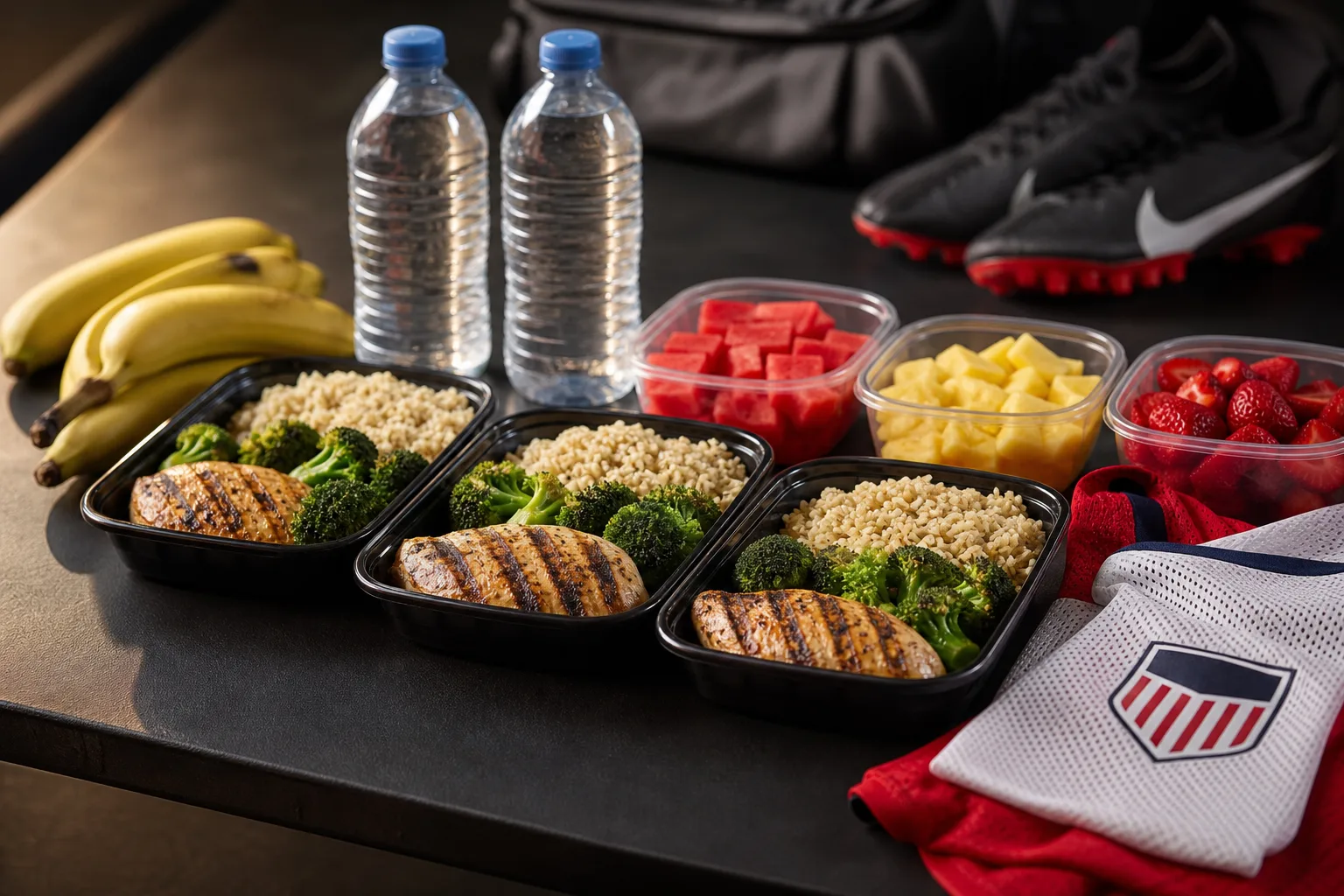
USMNT Body Fat Percentage & Diet: What USA Soccer Players Actually Eat
What body fat percentage do U.S. men''s soccer players carry? How USMNT staff sets diet, macros, and match-day fueling — plus realistic targets for amateur athletes.
Elite soccer is a weight-class sport disguised as skill. Carry too much fat and your first step slows. Cut too aggressively and you lose power in the second half. U.S. men's national team (USMNT) staff monitor body composition the same way club programs in Europe do — DEXA scans, skinfold testing, and daily meal structure at camp.
This guide covers typical body fat ranges for USA soccer players, how federation nutrition works, and diet principles you can use without a team chef.
What Body Fat Percentage Do Soccer Players Have?
Research on elite male outfield soccer players usually lands between 8% and 12% body fat, depending on position, measurement method, and point in the season. Goalkeepers often run 10–14% — extra mass helps in the box but still must not kill mobility.
USMNT and elite soccer: realistic ranges
| Position | Typical body fat range (season) | Notes |
|---|---|---|
| Winger / fullback | 7–10% | Lowest averages; speed priority |
| Striker | 8–11% | Balance power and lean mass |
| Central midfielder | 8–12% | Highest running loads; slightly more variability |
| Center back | 9–12% | Aerial duels reward strength |
| Goalkeeper | 10–14% | Less sprint volume; still athletic |
These are population averages, not rules. USMNT medical staff set individual targets — a 6'4" center back and a 5'9" winger will not share the same number.
How body fat is measured
National teams use:
- DEXA scan — gold standard for lean mass vs fat mass
- Skinfold calipers — quick camp screening
- Bioimpedance — daily checks in some club setups (less accurate alone)
If you are not a pro, a DEXA once or twice a year plus waist measurement and progress photos beats obsessing over daily scale weight.
Why Body Fat Matters on the Pitch
Fat does not contract. Every percentage point above your performance sweet spot costs:
- Acceleration and deceleration — critical for pressing and transitions
- Heat tolerance — World Cup summers punish extra insulation
- Joint load — more mass on knees and Achilles over 90 minutes
- Recovery between games — congested schedules favor leaner players
USMNT fitness staff do not chase shredded Instagram abs — they chase repeat sprint ability and durability.
USMNT Diet Structure at Camp
When the squad assembles, meals are timed around training — not left to airport food courts.
Daily meal rhythm (typical elite camp)
- Breakfast — protein, complex carbs, fruit (oats, eggs, yogurt, whole-grain toast)
- Pre-training snack — banana, rice cake, sports drink if session is intense
- Lunch — lean protein, rice or pasta, vegetables, hydration
- Pre-match or second session fuel — lighter carbs, low fat and fiber
- Dinner — protein recovery, vegetables, moderated carbs if next day is rest
- Evening — casein-friendly options if early morning session (Greek yogurt, milk)
Alcohol is limited in camp. Sleep and hydration are treated as nutrition extensions.
Macronutrient Guidelines for Soccer Players
Exact grams are individualized, but sports nutrition literature for male soccer players often clusters around:
| Macro | General range (training day) | Role |
|---|---|---|
| Protein | 1.6–2.2 g per kg body weight | Muscle repair, immune support |
| Carbohydrate | 4–7 g per kg (higher on match days) | Glycogen for sprints and skills |
| Fat | 0.8–1.2 g per kg | Hormones, fat-soluble vitamins |
A 75 kg (165 lb) midfielder on a hard training day might land near:
- 120–165 g protein
- 300–525 g carbs
- 60–90 g fat
Match days bump carbs up, fat and fiber down pre-kickoff to avoid stomach issues.
Match-Day and Tournament Fueling
USMNT tournament prep mirrors UEFA protocols:
- 3–4 hours before kickoff — familiar meal, mostly carbs and lean protein
- 60–90 minutes before — small carb top-off (fruit, gel, sports drink)
- Halftime — fluids, electrolytes, quick carbs if needed
- Post-match — protein + carbs within 30–60 minutes (shake, chicken and rice)
- Between knockout-round games — glycogen reload, sleep, no new foods
In heat (summer qualifiers, World Cup groups), sodium and fluid get as much attention as macros.
Off-Season vs. In-Season Body Comp
Players arrive at camp within an agreed body-fat corridor. Off-season allows slight gain; preseason trims it.
| Phase | Body comp goal | Diet emphasis |
|---|---|---|
| Off-season (4–6 weeks) | Maintain or slight rebuild | Adequate protein, controlled indulgence |
| Preseason | Drop toward in-season target | Higher protein, structured carbs around work |
| In-season | Stable lean range | Carb periodization by match schedule |
| Tournament | Hold, do not experiment | Same meals, hydration discipline |
Crash cutting before camp risks muscle loss and hamstring injuries — USMNT staff prioritize lean mass retention.
Common Foods on a USMNT-Style Plate
Nothing exotic — execution and timing matter.
Proteins: chicken, turkey, fish (salmon, cod), eggs, lean beef in moderation, Greek yogurt
Carbs: rice, pasta, potatoes, oats, whole-grain bread, fruit
Fats: olive oil, nuts, avocado — portion-controlled
Vegetables: large servings for fiber and micronutrients (not right before kickoff)
Hydration: water, electrolyte drinks in heat; limit sugary soda
Supplements vary by player (vitamin D, omega-3, whey) but food comes first in federation guidelines.
Amateur Targets: What Should You Aim For?
Unless you play professionally:
- Outfield recreational players: 10–15% body fat can still perform well; improve gradually
- Competitive amateur / college: work toward 9–12% if speed is your edge
- Never cut so hard that gym and sprint numbers drop — performance is the metric
Use a food log or macro tracker for 2–4 weeks to learn portion sizes. Armstrong pairs workout logging with nutrition tracking so you see whether diet supports your training block. Pair this with our USMNT training workouts guide for the full picture.
Red Flags: When Leaner Is Not Better
Stop cutting if you notice:
- Resting heart rate elevated for days
- Sleep disruption
- Recurring soft-tissue strains
- Loss of strength on key lifts
- Irritability and illness frequency up
USMNT medical staff pull players from overload — amateurs should listen to the same signals.
Frequently Asked Questions
What is Cristiano Ronaldo's body fat percentage?
Media reports during peak seasons often cite around 7% — exceptionally low. Most USMNT outfielders sit slightly higher for sustainable performance.
Do USMNT players follow keto or low-carb diets?
Generally no during season. Soccer is glycolytic — carbs fuel repeated sprints. Low-carb phases are rare and short if used at all.
How often is body fat tested on the national team?
At camps: often entry screening plus mid-camp checks. Club season testing varies weekly to monthly.
Can I see abs at 12% body fat?
Often yes, depending on muscle mass and genetics. Performance beats visibility — sprint times and endurance matter more than a six-pack in the mirror.
Bottom Line
USMNT players typically carry 8–12% body fat as outfielders, fueled by periodized carbs, high protein, timed meals, and hydration discipline — not fad diets.
Measure progress. Track food and training together in Armstrong so your body composition supports the workouts on your log — not the other way around.
Related guides
Best Gyms in Miami (2026) — Beach, Brickell & Budget Compared
Ranked guide to the 20 best gyms in Miami — Equinox, Life Time, Crunch, Planet Fitness, and boutique studios. Prices, neighbourhoods, and who each club suits.
Read article →Best Gyms in Manchester (2026) — Prices Compared Across the City
Compare the 20 best gyms in Manchester — PureGym, The Gym Group, JD Gyms, David Lloyd, and boutique strength spots. Prices, tram access, and who each club suits.
Read article →Best Gyms in Edinburgh (2026) — Prices, Old Town & Leith Compared
Compare the 20 best gyms in Edinburgh — PureGym, The Gym Group, Edinburgh Leisure, Bannatyne, and boutique strength studios. Prices and who each club suits.
Read article →