Armstrong Team
World Cup Training Workouts: How Brazil, Argentina, Germany, France & Spain Prepare
Discover how the five most famous World Cup national teams train — Brazil, Argentina, Germany, France, and Spain. Session structure, gym work, recovery, and what recreational lifters can borrow.
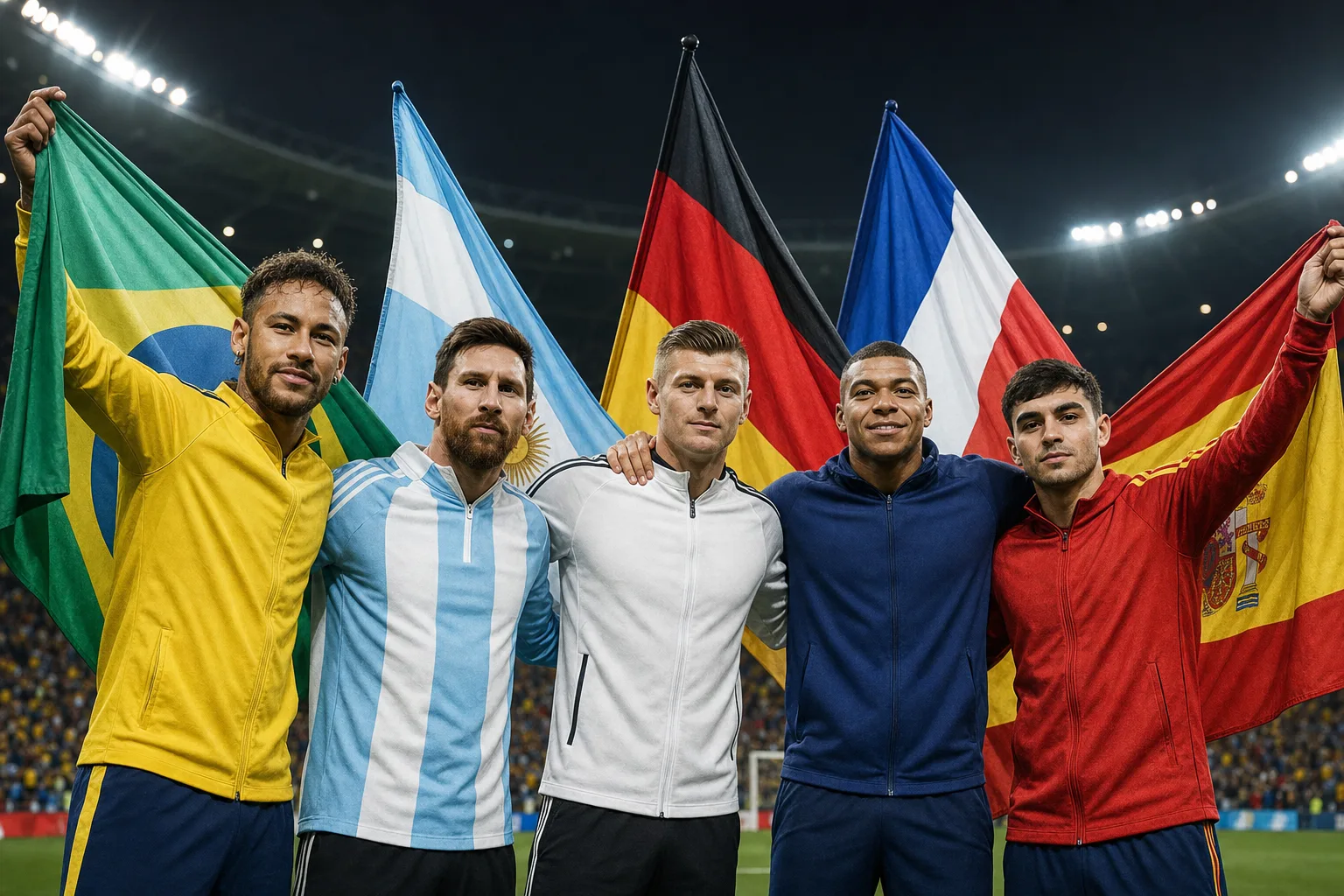
The FIFA World Cup is not won on talent alone. The five most storied national programs — Brazil, Argentina, Germany, France, and Spain — each built distinct training cultures over decades. Understanding how they prepare helps you train smarter, whether you play Sunday league or just want athletic conditioning that transfers to the pitch.
This guide breaks down what each elite squad prioritizes in the gym, on the track, and in recovery — plus practical takeaways for your own program.
Why National Team Training Differs From Club Training
International windows are short. Coaches have days, not months, to sharpen fitness and tactical cohesion. That forces:
- High-density sessions — more work per minute
- Position-specific loads — wingers sprint more than center backs
- Injury-risk management — no club medical staff on site
- Travel-adjusted recovery — sleep, hydration, and load monitoring matter
Modern squads use GPS vests, heart-rate zones, and force plates. The principles underneath are still useful without a sports-science budget.
Brazil: Flair Built on Agility and Elastic Power
Brazil's identity is creative attacking football, but the Seleção has long paired skill work with explosive athleticism.
Typical training focus
| Area | What they emphasize |
|---|---|
| Agility | Cone drills, change-of-direction, small-sided games |
| Lower-body power | Jump training, single-leg hops, resisted sprints |
| Core stability | Rotational medicine-ball work for shooting and crossing |
| Technical volume | Rondos and tight-space passing under fatigue |
Brazilian setups often blend plyometrics with ball work so players produce power without losing touch. Gym sessions lean toward unilateral leg work (lunges, split squats) and hip mobility — not bodybuilding-style mass gain.
What you can copy
- 2× weekly plyo blocks (box jumps, bounds) after a thorough warm-up
- Single-leg strength for knee stability on cuts
- Finish sessions with 10–15 minutes of small-sided games for conditioning
Argentina: Strength Without Losing Quickness
Argentina's golden generations balanced South American technique with European-style physical preparation. Lionel Messi's longevity pushed the federation toward smarter load management — less grinding, more targeted work.
Typical training focus
- Compound strength — squats, deadlift variations, trap-bar work for posterior chain
- Hamstring durability — Nordic curls, RDLs, eccentric loading (critical for sprint-heavy players)
- Speed maintenance — short maximal sprints with full recovery, not endless jogging
- Flexibility and prehab — band work, hip flexor care, ankle mobility
Argentina camps often run double sessions in tournament prep: morning tactical, afternoon gym or pool recovery.
What you can copy
- Prioritize hamstring and glute strength if you sprint in your sport
- Keep heavy leg days 48–72 hours before match day
- Log sets and loads so you progress without overtraining
Germany: Systematic, Data-Driven Conditioning
Germany's 2014 World Cup title came from a Deutscher Fußball-Bund (DFB) model that treats fitness like engineering. The Mannschaft popularized structured periodization in international football.
Typical training focus
| Phase | Emphasis |
|---|---|
| Base | Aerobic capacity, movement quality, team shape |
| Build | High-intensity intervals, tactical pressing drills |
| Peak | Reduced volume, maximal speed, set-piece rehearsal |
Gym work emphasizes full-body strength with measurable benchmarks — players know target numbers for squats, pulls, and jump height. Recovery includes ice baths, compression, and strict sleep protocols.
German sessions are famous for pressing triggers tied to fitness — you run because the system demands it, not because someone yelled "work harder."
What you can copy
- Use interval training (e.g. 30s on / 90s off) instead of long slow runs for pitch fitness
- Track one compound lift and one jump metric weekly
- Deload before important matches or events
France: Athleticism and Explosive Wing Play
Les Bleus blend Caribbean and African sprint genetics with French academy technical standards. Their squads at 2018 and 2022 showcased raw speed across the front line and midfield.
Typical training focus
- Max-velocity sprint work — flying 30s, resisted sprints, wicket drills
- Upper-body power — push press, bench variations for hold-off strength
- Repeated sprint ability — crucial for players who press high then counter
- Pool and bike recovery — low-impact days between heavy field sessions
France's staff integrates neuromuscular priming before matches — short explosive sets to wake up the nervous system without fatigue.
What you can copy
- One dedicated speed day per week (full rest between reps)
- Upper-body pushing strength if you shield the ball or wrestle in the box
- Never skip recovery walks or light movement on rest days
Spain: Possession Football Demands a Unique Engine
Spain's tiki-taka era proved you need an extraordinary aerobic base to pass under pressure for 90+ minutes. La Roja trains work rate in tight spaces as much as straight-line speed.
Typical training focus
- Positional rondos — 4v2, 5v2 with touch limits; heart rate stays elevated
- Lactate tolerance — repeated high-speed passing patterns
- Single-leg endurance — cycling, slide-board work, lateral shuffles
- Moderate strength — enough to win duels, not so much that agility drops
Spanish methodology treats the brain and legs as one system — decisions under fatigue are trained, not assumed.
What you can copy
- Replace some steady-state cardio with circuit-style ball drills or shuttle runs
- Train deceleration — stopping fast matters as much as accelerating
- Keep body fat in a range that supports repeated efforts (see our USMNT body fat and diet guide)
For star-player specifics, see how Lionel Messi and Cristiano Ronaldo structure their training differently.
Comparing the Five: Quick Reference
| Team | Signature physical trait | Gym priority | Field priority |
|---|---|---|---|
| Brazil | Elastic agility | Unilateral power, core | Small-sided skill games |
| Argentina | Durable speed | Posterior chain, hamstrings | Max-speed sprints |
| Germany | Pressing endurance | Full-body strength benchmarks | HIIT, tactical runs |
| France | Top-end speed | Power, repeated sprints | Velocity work, recovery |
| Spain | Aerobic repeatability | Moderate strength | Rondos, lactate circuits |
Sample Week for a Recreational Player (Inspired by All Five)
| Day | Session |
|---|---|
| Monday | Lower-body strength (squat pattern, RDL, lunges) + core |
| Tuesday | Agility cones + small-sided game or shuttle runs |
| Wednesday | Rest or light swim / cycle |
| Thursday | Upper-body push/pull + medicine-ball throws |
| Friday | Speed day — 6–8 × 30m sprints, full recovery |
| Saturday | Match or long tactical session |
| Sunday | Walk, stretch, meal prep |
Log every session. Progressive overload applies to gym work; track sprint times and RPE on field days the same way.
Frequently Asked Questions
How many days a week do World Cup players train?
In camp, most national teams train 5–6 days per week with one full or active recovery day. Volume drops sharply during knockout rounds.
Do World Cup players lift heavy weights?
Yes, but heavy is relative. Squats and pulls are programmed year-round; peak tournament phases often reduce load to protect freshness.
Can I train like a pro on a busy schedule?
Steal the structure, not the volume. Two gym days, one speed day, and one small-sided session per week beats random gym visits.
Bottom Line
Brazil chases elastic power. Argentina protects speed with posterior-chain strength. Germany systematizes everything. France unleashes athleticism. Spain builds an engine for possession. None of these programs rely on guesswork — they log, periodize, and recover on purpose.
Use Armstrong to track your gym numbers and conditioning sessions in one place. What gets measured — on the pitch or under the bar — actually improves.
Related guides
Best Gyms in Miami (2026) — Beach, Brickell & Budget Compared
Ranked guide to the 20 best gyms in Miami — Equinox, Life Time, Crunch, Planet Fitness, and boutique studios. Prices, neighbourhoods, and who each club suits.
Read article →Best Gyms in Manchester (2026) — Prices Compared Across the City
Compare the 20 best gyms in Manchester — PureGym, The Gym Group, JD Gyms, David Lloyd, and boutique strength spots. Prices, tram access, and who each club suits.
Read article →Best Gyms in Edinburgh (2026) — Prices, Old Town & Leith Compared
Compare the 20 best gyms in Edinburgh — PureGym, The Gym Group, Edinburgh Leisure, Bannatyne, and boutique strength studios. Prices and who each club suits.
Read article →